Megalithic structures are controversial because they are key witnesses to the cultural developments upon which we anchor our most sweeping stories of the past. Being themselves mute, we speak through them to tell ourselves where we came from and where we are going.
Were they put here by slaves? Aliens? God? Were we?
Ventriloquizing big stones is as important to priests as it is to scientists and charlatans. The stakes are not just life-and-death but life-after-death.
To practice the mineral arts we apply the same rigor to megaliths as we do nanoliths. We study stone circles the way we do semiconductor physics – because the same principles govern both.
It just so happens that there is someone who does this already quite well. His name is Geoffrey Drumm and he’s a YouTuber with a mohawk and neck tattoos. He's also the most significant Egyptologist since Herodotus. Perhaps since Imhotep.
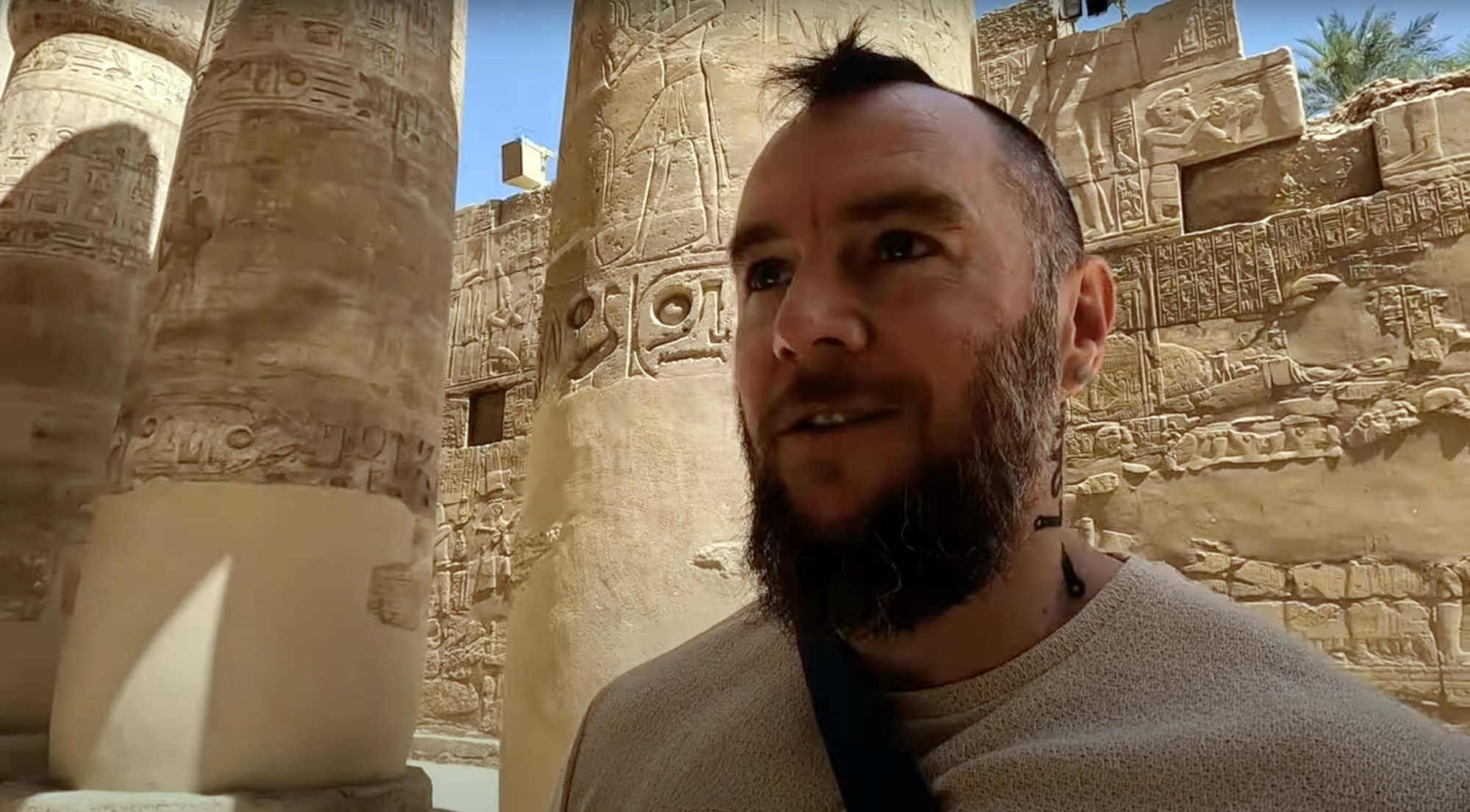
Geoff applies the mineral arts — physics, chemistry, geometry, material science, plasma dynamics, electrical and electronics engineering, and so on — to ancient megalithic structures. What he discovered is that the composition of these stones — both their internal make up and their placement — can be analyzed functionally like a landscape-scaled microchip.
Or, to make a slogan of it:
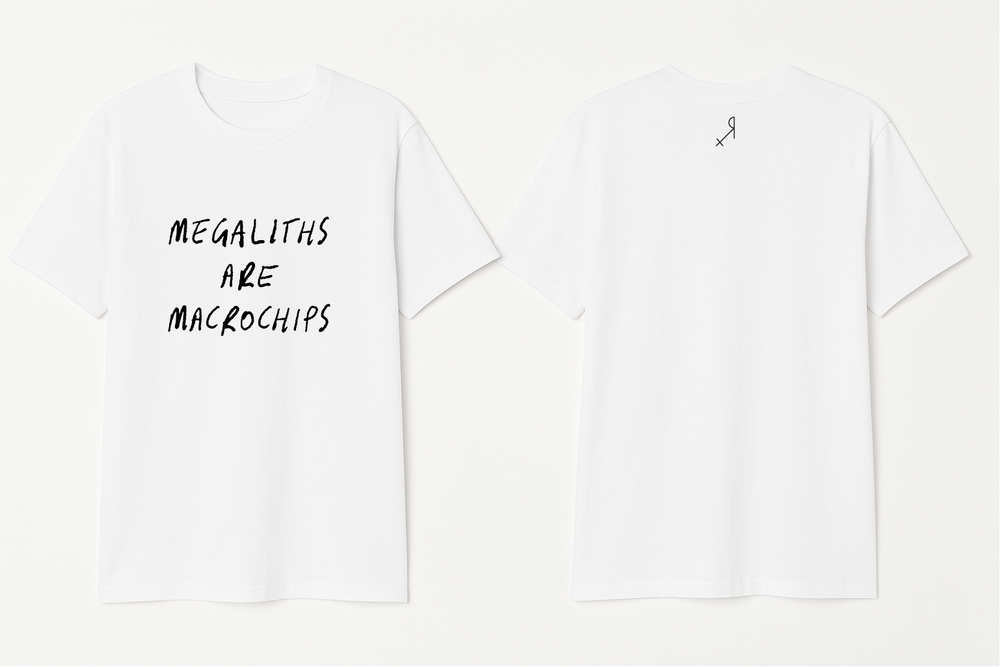
Megaliths are Macrochips
Others before him have had similar insights, but Geoff is special because his model is sufficiently advanced to be generally applicable. He has decoded megalithic macrochips from Ireland to Japan using the same techniques, the very same a computer engineer would use to inspect a microchip.
And as with computing, the user is a human and the product is transformation.
Geoff’s macrochips interface with our bodies in ways that would have altered our ancestors’ state of consciousness. Just as social media reprograms our psyche, so too did ancient architecture architect our minds. Ancient architecture was the first bicycle for the mind.
Whether or not Geoff's story is historically accurate is immaterial. What matters is that it allows us to make a transliteration from the very big to the very small and back again, because the mineral arts he applies are scaleless.